From Chaos to Connection

Activity 1.3: Body Language Guide
Showing, Not Just Telling
Children read our nonverbal cues even more than our words.
Even before you open the book, your child is reading you. Every gesture, glance, and tone tells them what kind of moment this will be — rushed or relaxed, pressured or playful. The cues below help you model the kind of energy that turns reading time into connection time.
Cue
Body Language
Message to Your Child
Soft Eyes
Open Shoulders
Relaxed Smile
Leaning In
Expressive Voice
Shared Laughter
Gentle Touch
Relaxed gaze, gentle blinking
Shoulders down, facing your child
Shoulders down, facing your child
Subtle forward lean when reading together
Slightly exaggerated tone, whisper for suspense
Laugh naturally at funny parts
Light tap or shared blanket
“I’m present and enjoying this moment.”
Safety and attention
Warmth and calm enjoyment
Engagement and curiosity
Brings story to life
Connection and shared joy
We’re in this together
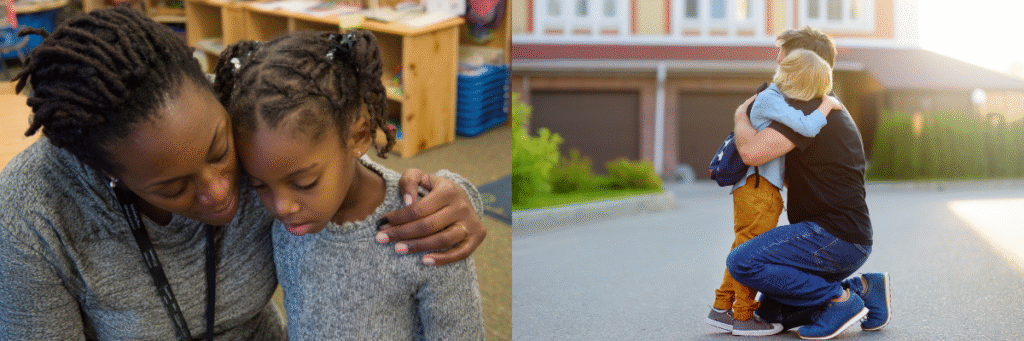
Your non-verbal cues send the strongest message. Joyful reading looks relaxed, not rigid.
The “Cozy” Posture:
- Avoid sitting stiffly at a desk. Instead, curl up on the couch, lean back in a comfy chair with your feet up, or even lie on the floor with a pillow. Show that reading is a comfort activity.
Facial Reactions:
Let your face react to what you’re reading. Smile, laugh out loud, raise your eyebrows in surprise, or furrow your brow in suspense. Let your child see that the book is having an emotional effect on you.
Audible Cues:
- Don’t read in complete silence. A happy sigh, a small gasp, or a chuckle are powerful signals that you are genuinely engaged.
Audib
- Make a point of putting your phone down (screen-down, on silent) and picking up your book with a look of relief, as if to say, “Finally, time for the good stuff.”
Avoid:
- Tapping your foot, looking at the clock, or sighing with impatience. This signals that reading is a chore you’re trying to get through.
Instead: Take a breath, reset your posture, and remind yourself that reading time is connection time, not performance time.
Mini Practice Moment
Try this: Record a short video of yourself reading. Watch it back and notice your nonverbal cues.
Do you look relaxed and inviting?
-
Are your eyes and voice showing curiosity and joy?
-
Is your body posture saying, “I love this moment with you”?
When your child sees joy on your face, they learn that reading isn’t just about decoding words — it’s about feeling something together.
Finish Course Early?
You have not completed all required lessons and assessments.