Lesson 3.2 – Props, Movement & Sensory Engagement

Turn Story Time into a Full-Body Experience
When children wiggle, fidget, or lose focus during story time, it doesn’t mean they aren’t listening—it means their bodies are asking to join the story.
Adding movement and sensory elements:
-
Activates multiple brain areas at once
-
Strengthens vocabulary and comprehension
-
Helps kinesthetic and visual learners access meaning
-
Channels energy into the story rather than away from it
-
Turns reading from passive listening into playful learning
When kids act out a word or idea, they aren’t just hearing it—they’re living it.
This makes the story memorable, joyful, and neurologically sticky.

Key Points
Prop Power
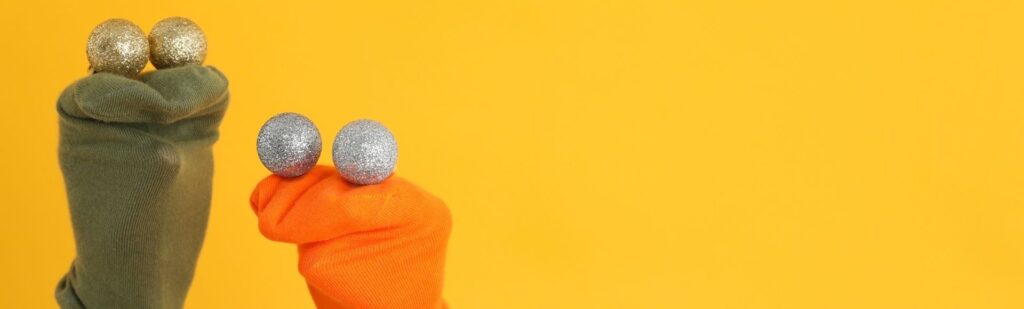
Prop Power Everyday items—spoons as wands, socks as puppets, scarves as capes—give abstract ideas concrete form, helping kids visualize and remember plot details. You don’t need to buy anything. The best props are already in your home.
Move to Groove
Move to Groove
Inviting children to act out actions—tip-toeing like a sneaky cat, stretching tall like a beanstalk, or flapping arms like a bird—channels energy and reinforces vocabulary. When bodies move, brains engage differently. Use this strategically during high-action moments or when attention wanes.
Sense-ational Layers
Sense-ational Layers
Sound effects, textured objects, or even a spritz of themed fragrance (think pine for a forest tale) create richer neural pathways for comprehension. Multi-sensory experiences stick in memory longer than words alone.
Keep It Child-Led
Keep It Child-Led
Offer choices and follow their creative twists. When kids direct the prop or movement, motivation and ownership soar. If they want the blanket to be a river instead of a cape, follow their lead—that’s creative thinking in action.
Prop Power Everyday items—spoons as wands, socks as puppets, scarves as capes—give abstract ideas concrete form, helping kids visualize and remember plot details. You don’t need to buy anything. The best props are already in your home.
Move to Groove
Inviting children to act out actions—tip-toeing like a sneaky cat, stretching tall like a beanstalk, or flapping arms like a bird—channels energy and reinforces vocabulary. When bodies move, brains engage differently. Use this strategically during high-action moments or when attention wanes.
Sense-ational Layers
Sound effects, textured objects, or even a spritz of themed fragrance (think pine for a forest tale) create richer neural pathways for comprehension. Multi-sensory experiences stick in memory longer than words alone.
Keep It Child-Led
Offer choices and follow their creative twists. When kids direct the prop or movement, motivation and ownership soar. If they want the blanket to be a river instead of a cape, follow their lead—that’s creative thinking in action.
Why It Works
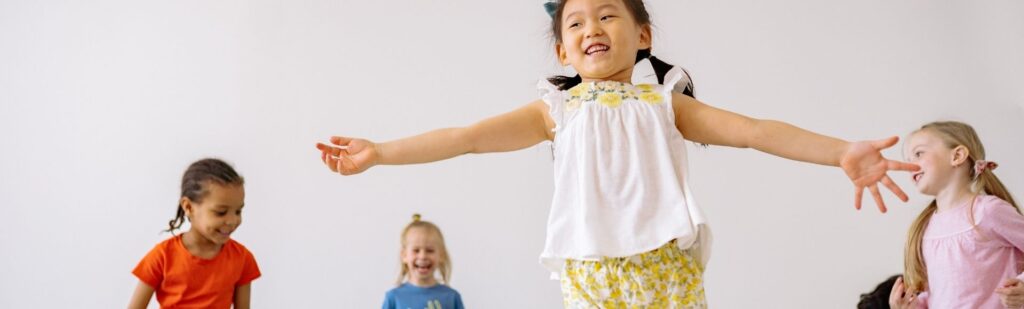
Movement and touch activate multiple areas of the brain simultaneously, helping children store and recall new vocabulary more easily. When a child acts out “tiptoeing like a sneaky cat,” they’re not just hearing the word—they’re living it. This creates richer neural pathways for comprehension and memory.
Props and sensory elements also:
- Give abstract ideas concrete form (a spoon becomes a magic wand)
- Help visual and kinesthetic learners access stories in their preferred style
- Channel restless energy productively
- Make reading memorable and repeatable (“Can we do the puppet story again?”)
Age-Specific Guidance
Ages 3-5: Focus on large movements and simple props. At this age, children need whole-body involvement. Try: jumping like bunnies, being tall/small, using one prop at a time.

Ages 6-8: Can handle prop collection, more complex movement sequences, and can help create the props themselves. Try: building simple puppets, creating obstacle course retellings, using multiple props in one story.

Try This Tonight!
Choose ONE prop from around the house—a blanket for a cape, a wooden spoon for a microphone, a flashlight for a spotlight, or a sock for a silly puppet.
Use it during one story moment, then ask your child: “What else could we use next time?”
Small steps build big engagement! Let your child’s ideas guide your next prop adventure.
Lets Look at Activities to Deepen This Skill

Turn storytime into an adventure your child can step right into. Instead of only listening, they’ll be hunting for hidden clues, marching along the story’s path, feeling textures, creating sound effects, and even dressing up as part of the tale. These playful, hands-on activities spark curiosity and imagination, helping your child predict what might happen next and eagerly wait for favorite moments to appear.
By bringing stories to life through movement, touch, and sound, reading becomes something they do, not just something they hear. The result? Deeper engagement, more excitement for repeated readings, and a joyful sense of ownership over every page that follows.

Activity 1:
Prop Scavenger Hunt Before reading, send your child on a 2-minute hunt to find three items that might appear in tonight’s story.
They might surprise you with creative connections!
This builds prediction skills and investment in the story.
Activity 2:
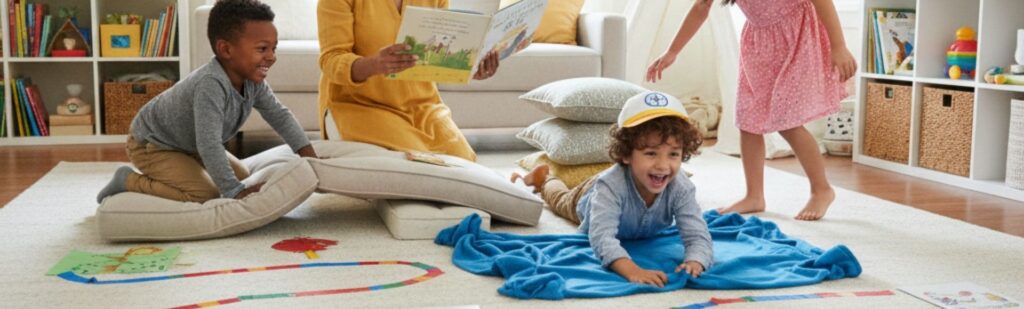
Movement Map Draw a simple path of the story’s journey on a large piece of paper or use tape on the floor.
Act out the story together, moving through your living room as the characters move through their world.
“First we cross the bridge (walk across the couch), then we climb the mountain (climb the stairs)…”

Activity 3:
Sensory Story Box For a favorite book you’ll read multiple times, create a small box with themed items:
-
-
- Cotton balls for clouds
-
-
-
- Sandpaper for rough bark
-
-
-
- Bells for jingles
-
-
-
- Fabric squares for different textures
-
Pull items out as they appear in the story.
Your child will anticipate them on repeated readings.
Activity 4:
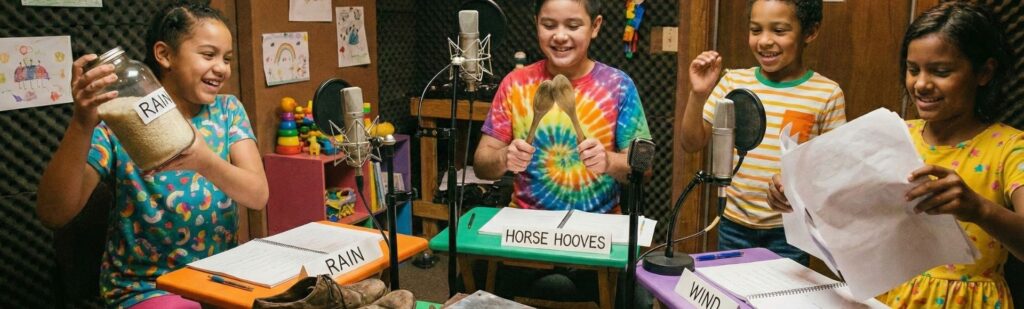
Sound Effects Studio Before reading, gather items that can make sounds (rice in a jar for rain, wooden spoons for horse hooves, paper for wind).
Assign different sounds to different story moments.
Your child becomes the sound designer!
Activity 5:
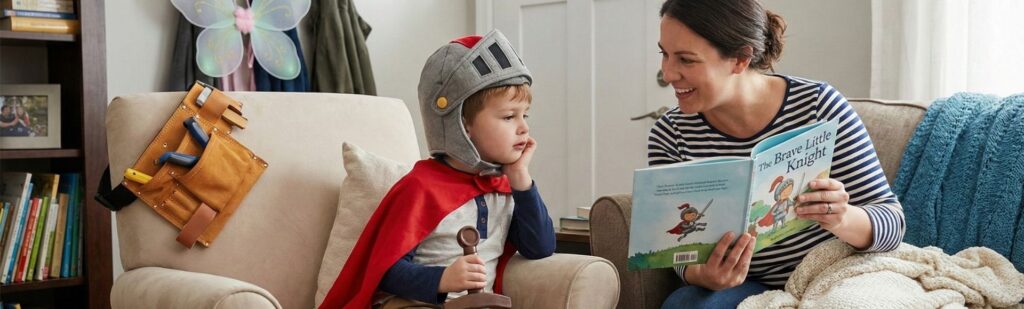
Dress-Up Read-Aloud Let your child wear one item that connects to the story (a hat, a scarf, fairy wings, a tool belt).
They stay in “character” while you read.
This is especially powerful for reluctant listeners.
Lets Look at Activities to Deepen This Skill
Turn storytime into an adventure your child can step right into. Instead of only listening, they’ll be hunting for hidden clues, marching along the story’s path, feeling textures, creating sound effects, and even dressing up as part of the tale. These playful, hands-on activities spark curiosity and imagination, helping your child predict what might happen next and eagerly wait for favorite moments to appear.
By bringing stories to life through movement, touch, and sound, reading becomes something they do, not just something they hear. The result? Deeper engagement, more excitement for repeated readings, and a joyful sense of ownership over every page that follows.
Activity 1:
Prop Scavenger Hunt Before reading, send your child on a 2-minute hunt to find three items that might appear in tonight’s story.
They might surprise you with creative connections!
This builds prediction skills and investment in the story.
Activity 2:
Movement Map Draw a simple path of the story’s journey on a large piece of paper or use tape on the floor.
Act out the story together, moving through your living room as the characters move through their world.
“First we cross the bridge (walk across the couch), then we climb the mountain (climb the stairs)…”
Activity 3:
Sensory Story Box For a favorite book you’ll read multiple times, create a small box with themed items:
-
-
- Cotton balls for clouds
-
-
-
- Sandpaper for rough bark
-
-
-
- Bells for jingles
-
-
-
- Fabric squares for different textures
-
Pull items out as they appear in the story.
Your child will anticipate them on repeated readings.
Activity 4:
Sound Effects Studio Before reading, gather items that can make sounds (rice in a jar for rain, wooden spoons for horse hooves, paper for wind).
Assign different sounds to different story moments.
Your child becomes the sound designer!
Activity 5:
Dress-Up Read-Aloud Let your child wear one item that connects to the story (a hat, a scarf, fairy wings, a tool belt).
They stay in “character” while you read.
This is especially powerful for reluctant listeners.
When to Use Props and Movement


Best times:
- When reading a book for the 2nd or 3rd time (familiar enough to play with)
- During high-action scenes
- When attention is fading
- For particularly important vocabulary you want to stick
- When your child naturally starts moving while listening
When to skip:
- First reading of a complex book (let them focus on the story)
- During quiet, emotional moments that need stillness
- When your child is deeply engaged without props—don’t interrupt flow!
Book-to-Prop Matching Guide
Match each story type with a simple household prop to make reading come alive. Props give abstract ideas concrete form and help children connect words to meaning through touch and imagination.
Story Type
🗺️ Adventure
🌙 Bedtime
🍃 Nature
🪄 Fantasy
Prop Ideas
Map, compass, hat
Blanket, soft toy
Leaf, pebble, small jar
Wand, crown, scarf
Example Book
We’re Going on a Bear Hunt
Goodnight Moon
The Gruffalo
Room on the Broom
Tip: Choose one symbolic prop per story to avoid clutter and keep focus on imagination—not materials.
The No-Buy Prop List
Please enable JavaScript in your browser to complete this form.Please enable JavaScript in your browser to complete this form.


Books Perfect for Props & Movement
- The Very Hungry Caterpillar by Eric Carle (food props, metamorphosis movements)
- Going on a Bear Hunt by Michael Rosen (movement for each terrain)
- Room on the Broom by Julia Donaldson (character props, flying movements)
- The Three Billy Goats Gruff (bridge prop, troll voice, trip-trap sounds)
- Chicka Chicka Boom Boom by Bill Martin Jr. (letter cards, falling movements)
💛 Final Thought
Props and movement are tools, not distractions. Use them strategically at high-impact moments, then step back and let the story—and your child’s imagination—take center stage.
When stories come alive through the senses, reading becomes play—and play becomes learning.
Bring Verbs to Life
Movement Action Cards
Sensory Planning
Distraction Troubleshooting Guide
Storage and Organization
📥 Downloads for This Lesson
Movement Action Cards (PDF) 12 illustrated cards showing different movements (tiptoe, stretch, spin, stomp, etc.) that you can pull randomly or match to story moments.
The Ultimate No-Buy Prop List (PDF) An expanded guide with 30 household items, their story uses, and which book types they work best with.
Storage & Organization Tip Sheet (PDF) How to create a simple story-time basket that keeps props accessible without creating clutter.
Reflection
After adding one prop or movement to tonight’s reading: Did your child’s body language change? Did they ask to do it again? What surprised you about their engagement level?