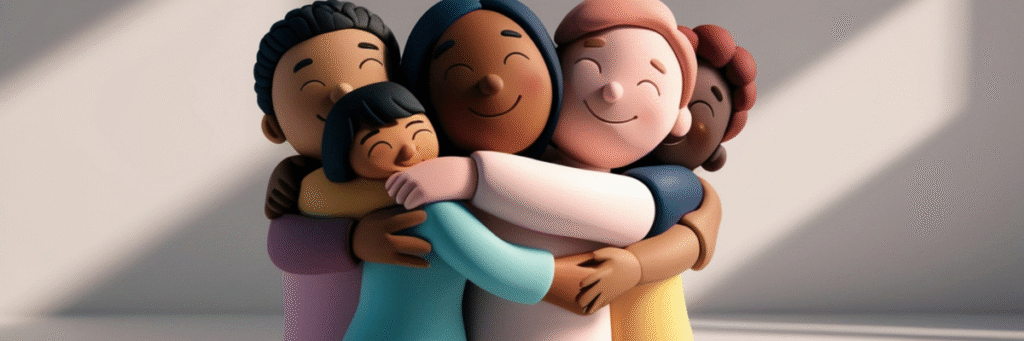
Lesson 2.3 – Building a Diverse & Inclusive Library
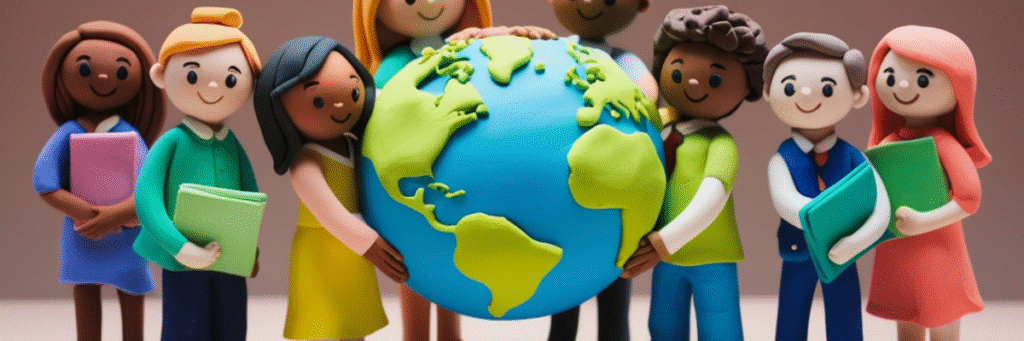
Books shape how children see themselves, others, and their place in the world. In this lesson, you’ll learn how to curate a home library that reflects your child’s identity and opens gentle windows into different cultures, families, abilities, and experiences. A diverse library builds empathy, belonging, and a richer understanding of humanity.
The Morrison Family & The Bookshelf That Didn’t Show “Her”
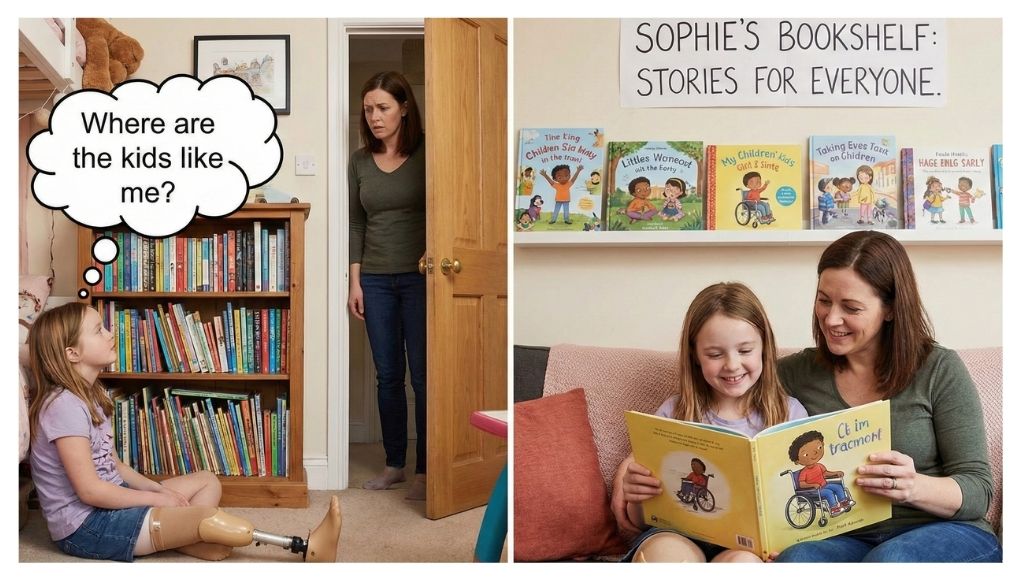
Sophie Morrison loved stories—but none of the stories showed kids like her. No prosthetic legs. No wheelchairs. No visible differences. Her mother had accidentally built a bookshelf that told Sophie: “People like you don’t exist in books.” Until one heartbreaking question forced her mom to change everything.
Part 1: The Question That Broke Her Mother’s Heart
Part 1: The Question That Broke Her Mother’s Heart
Six-year-old Sophie Morrison was born with one leg shorter than the other. She wore a prosthetic and had since she was two years old. She ran, jumped, climbed—she was unstoppable.
But one evening, during bedtime reading, Sophie said something that made her mom, Rachel, freeze.
They were reading a princess story. Beautiful illustrations. A brave heroine. A happy ending.
Sophie touched the picture of the princess and said quietly: “Mom, why don’t any of the kids in my books look like me?”
Rachel’s throat tightened. “What do you mean, sweetheart?”
“They all have two real legs. Nobody has a leg like mine.”
Rachel looked at their bookshelf—30+ picture books collected over years. Princesses, astronauts, kids on playgrounds, families at the beach.
Sophie was right.
Not a single character wore a prosthetic. Not one child used a wheelchair. No hearing aids. No glasses. No crutches. No visible differences at all.
Every body was the same.
“I guess… the people who make books just don’t think about it,” Rachel said weakly.
Sophie nodded, but something in her face changed. She looked at the princess differently now—like she was looking at someone from a world she’d never be part of.
That night, Rachel couldn’t sleep. Her daughter was learning that people like her didn’t belong in stories.
Part 2: The Search That Changed Everything
Part 2: The Search That Changed Everything
The next day, Rachel went online. She searched: “Children’s books with disability representation.”
Hundreds of results appeared.
She’d had no idea.
She found books with kids in wheelchairs going on adventures. Kids with prosthetic legs playing soccer. Kids with cochlear implants solving mysteries. Kids with Down syndrome being silly and smart and wholly themselves.
They existed. Rachel just hadn’t known to look for them.
She ordered five books immediately.
But then she kept scrolling and realized something else: their bookshelf was missing more than just kids with disabilities.
Every family looked the same. Two parents. One race. Same economic background. Same type of home.
Where were the single parents? The grandparents raising kids? The families with two moms or two dads? The kids who looked like Sophie’s best friend, Amara, who was Black? The kids who spoke Spanish at home like her classmate, Diego?
Rachel had accidentally created a bookshelf that told one kind of story—and left everyone else invisible.
She made a new rule: from now on, she’d be intentional. She’d look for books that showed Sophie her world—and books that opened windows into other people’s worlds too.
Part 3: The Book That Made Sophie Gasp
Part 3: The Book That Made Sophie Gasp
A week later, a package arrived.
That night, Rachel pulled out a new book: Just Ask! by Sonia Sotomayor—a story about a garden where kids with all different abilities work together.
On the third page, Sophie gasped.
There was a girl. Playing. Smiling. Wearing a prosthetic leg.
“Mom! She has a leg like mine!”
Sophie touched the page, tracing the outline of the prosthetic. “She’s in a book. She’s doing regular stuff. She’s just… there.”
They kept reading. The book showed kids with wheelchairs, hearing aids, crutches, autism, ADHD—all working together in a garden. The differences were normal. No one was “special” or “inspiring.” They were just kids being kids.
When they finished, Sophie said: “Can we read it again?”
They read it three more times.
Part 4: Three Months Later
Part 4: Three Months Later
Rachel transformed their bookshelf.
Now it held:
- Mirror books (where Sophie saw herself): El Deafo (about a girl with a hearing aid), Emmanuel’s Dream (about a boy with one leg who bikes across Ghana), Just Ask!
- Window books (showing different lives): Last Stop on Market Street (urban life, different economic realities), The Family Book (all kinds of families), A Kids Book About Racism, The Name Jar (about a Korean immigrant)
Sophie still loved princess stories. But now she also had stories about kids in wheelchairs who were funny, kids with autism who were scientists, families with two dads, kids who celebrated Diwali instead of Christmas.
Last week, Sophie’s friend Amara came over for a playdate. Amara picked up The Colors of Us from the shelf—a book celebrating different skin tones.
“Oh! I have this book at home!” Amara said, excited.
Sophie grinned. “My mom is trying to get books with all different kinds of people. So everyone can see themselves.”
Later, Rachel overheard Sophie explaining her prosthetic to a new kid at the playground: “Lots of people have legs like mine. There are even kids in my books who have them. It’s just how some bodies are.”
No shame. No hesitation. Just matter-of-fact confidence.
Rachel realized: Books had taught Sophie that she belonged in the world—because she finally saw herself belonging in stories.
Part 1: The Question That Broke Her Mother’s Heart
Six-year-old Sophie Morrison was born with one leg shorter than the other. She wore a prosthetic and had since she was two years old. She ran, jumped, climbed—she was unstoppable.
But one evening, during bedtime reading, Sophie said something that made her mom, Rachel, freeze.
They were reading a princess story. Beautiful illustrations. A brave heroine. A happy ending.
Sophie touched the picture of the princess and said quietly: “Mom, why don’t any of the kids in my books look like me?”
Rachel’s throat tightened. “What do you mean, sweetheart?”
“They all have two real legs. Nobody has a leg like mine.”
Rachel looked at their bookshelf—30+ picture books collected over years. Princesses, astronauts, kids on playgrounds, families at the beach.
Sophie was right.
Not a single character wore a prosthetic. Not one child used a wheelchair. No hearing aids. No glasses. No crutches. No visible differences at all.
Every body was the same.
“I guess… the people who make books just don’t think about it,” Rachel said weakly.
Sophie nodded, but something in her face changed. She looked at the princess differently now—like she was looking at someone from a world she’d never be part of.
That night, Rachel couldn’t sleep. Her daughter was learning that people like her didn’t belong in stories.
Part 2: The Search That Changed Everything
The next day, Rachel went online. She searched: “Children’s books with disability representation.”
Hundreds of results appeared.
She’d had no idea.
She found books with kids in wheelchairs going on adventures. Kids with prosthetic legs playing soccer. Kids with cochlear implants solving mysteries. Kids with Down syndrome being silly and smart and wholly themselves.
They existed. Rachel just hadn’t known to look for them.
She ordered five books immediately.
But then she kept scrolling and realized something else: their bookshelf was missing more than just kids with disabilities.
Every family looked the same. Two parents. One race. Same economic background. Same type of home.
Where were the single parents? The grandparents raising kids? The families with two moms or two dads? The kids who looked like Sophie’s best friend, Amara, who was Black? The kids who spoke Spanish at home like her classmate, Diego?
Rachel had accidentally created a bookshelf that told one kind of story—and left everyone else invisible.
She made a new rule: from now on, she’d be intentional. She’d look for books that showed Sophie her world—and books that opened windows into other people’s worlds too.
Part 3: The Book That Made Sophie Gasp
A week later, a package arrived.
That night, Rachel pulled out a new book: Just Ask! by Sonia Sotomayor—a story about a garden where kids with all different abilities work together.
On the third page, Sophie gasped.
There was a girl. Playing. Smiling. Wearing a prosthetic leg.
“Mom! She has a leg like mine!”
Sophie touched the page, tracing the outline of the prosthetic. “She’s in a book. She’s doing regular stuff. She’s just… there.”
They kept reading. The book showed kids with wheelchairs, hearing aids, crutches, autism, ADHD—all working together in a garden. The differences were normal. No one was “special” or “inspiring.” They were just kids being kids.
When they finished, Sophie said: “Can we read it again?”
They read it three more times.
Part 4: Three Months Later
Rachel transformed their bookshelf.
Now it held:
- Mirror books (where Sophie saw herself): El Deafo (about a girl with a hearing aid), Emmanuel’s Dream (about a boy with one leg who bikes across Ghana), Just Ask!
- Window books (showing different lives): Last Stop on Market Street (urban life, different economic realities), The Family Book (all kinds of families), A Kids Book About Racism, The Name Jar (about a Korean immigrant)
Sophie still loved princess stories. But now she also had stories about kids in wheelchairs who were funny, kids with autism who were scientists, families with two dads, kids who celebrated Diwali instead of Christmas.
Last week, Sophie’s friend Amara came over for a playdate. Amara picked up The Colors of Us from the shelf—a book celebrating different skin tones.
“Oh! I have this book at home!” Amara said, excited.
Sophie grinned. “My mom is trying to get books with all different kinds of people. So everyone can see themselves.”
Later, Rachel overheard Sophie explaining her prosthetic to a new kid at the playground: “Lots of people have legs like mine. There are even kids in my books who have them. It’s just how some bodies are.”
No shame. No hesitation. Just matter-of-fact confidence.
Rachel realized: Books had taught Sophie that she belonged in the world—because she finally saw herself belonging in stories.
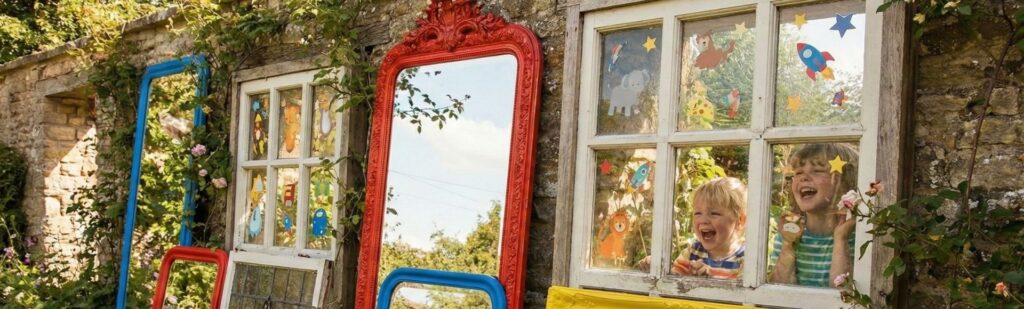
Books as Mirrors and Windows
The stories we surround our children with shape how they see themselves and how they understand the world.
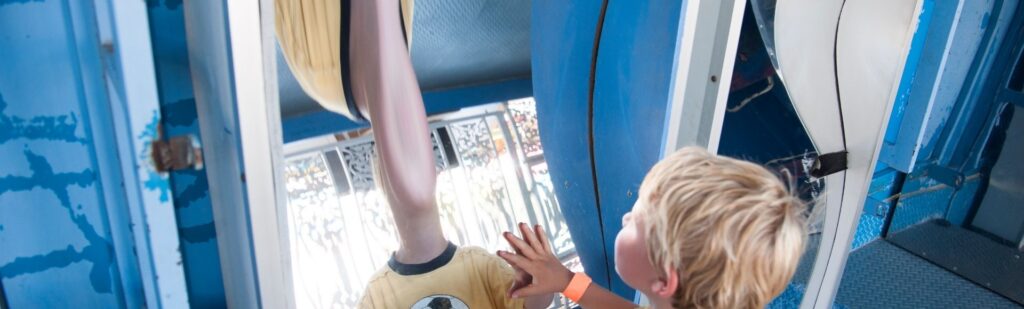
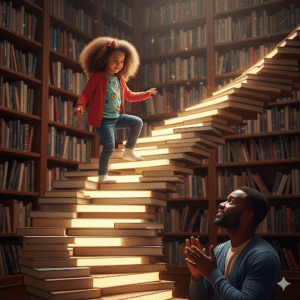
Books can be both mirrors and windows — reflecting a child’s own world while opening respectful views into others. A thoughtfully diverse library helps children build empathy, confidence, and a deep sense of belonging.
Just as the space you read in shapes how your child feels, the stories you choose shape how they see themselves and others.
Lorem ipsum dolor sit amet, consectetur adipiscing elit. Ut elit tellus, luctus nec ullamcorper mattis, pulvinar dapibus leo.
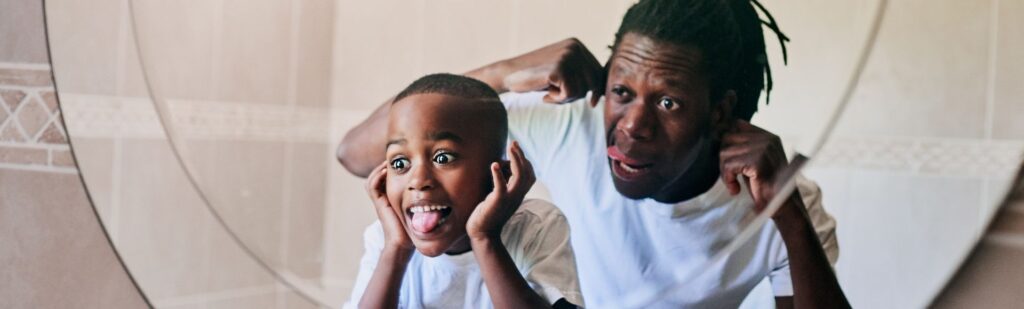
Mirrors: Books where children see themselves — their family structure, culture, race, language, abilities, or experiences reflected back.
Example:
- Mirror book for a biracial child: The Colors of Us by Karen Katz or Mixed Me! by Taye Diggs
Choose books that help children both see themselves and understand others. Include stories from your own culture alongside ones that explore new traditions and experiences.
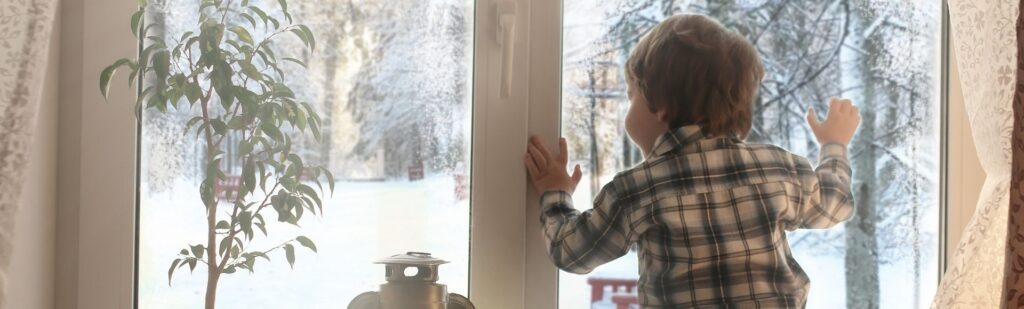
Windows: Books that offer views into lives and cultures different from their own, building empathy and understanding.
Example:
- Window book: Last Stop on Market Street by Matt de la Peña (exploring urban community life) or The Name Jar by Yangsook Choi (about a Korean immigrant child)
Choose books that help children both see themselves and understand others. Include stories from your own culture alongside ones that explore new traditions and experiences.
Lorem ipsum dolor sit amet, consectetur adipiscing elit. Ut elit tellus, luctus nec ullamcorper mattis, pulvinar dapibus leo.
Mirrors: Books where children see themselves — their family structure, culture, race, language, abilities, or experiences reflected back.
Example:
- Mirror book for a biracial child: The Colors of Us by Karen Katz or Mixed Me! by Taye Diggs
Choose books that help children both see themselves and understand others. Include stories from your own culture alongside ones that explore new traditions and experiences.
Windows: Books that offer views into lives and cultures different from their own, building empathy and understanding.
Example:
- Window book: Last Stop on Market Street by Matt de la Peña (exploring urban community life) or The Name Jar by Yangsook Choi (about a Korean immigrant child)
Choose books that help children both see themselves and understand others. Include stories from your own culture alongside ones that explore new traditions and experiences.
Proactive Representation
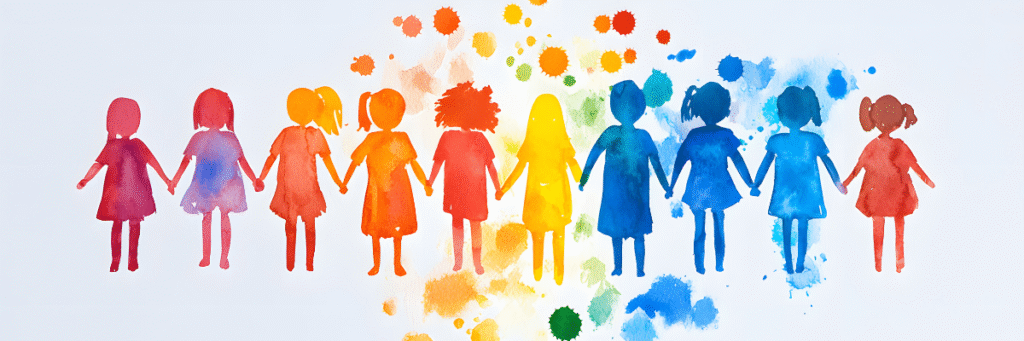
Make diversity intentional. Include varied races, ethnicities, languages, family structures, abilities, religions, and gender expressions so that no group is an occasional guest on your shelf.
-
Racial and ethnic diversity
-
Different family structures (single parents, same-sex parents, grandparents as caregivers, adopted families, blended families)
-
Characters with disabilities (physical, learning, neurodivergence)
-
Linguistic diversity (bilingual books, different dialects, sign language)
-
Religious and cultural celebrations
-
Gender diversity and non-stereotypical roles
-
Socioeconomic diversity
-
Geographic diversity (urban, rural, different countries)
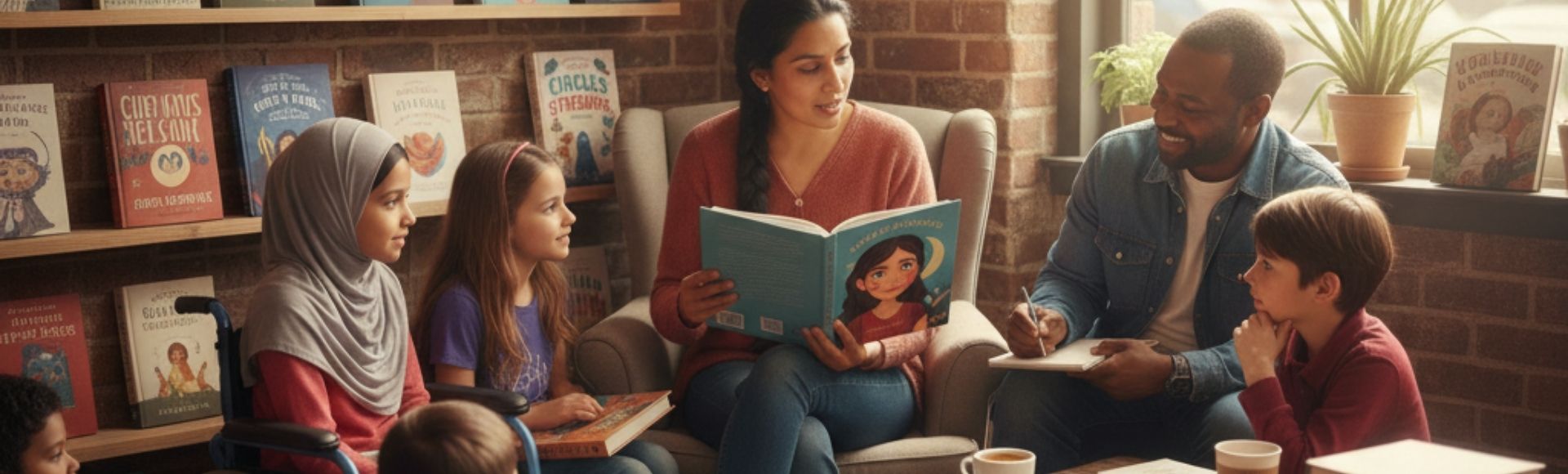
Quality over Tokenism
Look for authentic voices—authors and illustrators who represent the communities they portray. Seek layered, realistic characters rather than simplified “role models.”
Red Flags to Watch For:
-
Stereotyping: Characters reduced to cultural symbols or “exotic” traits
-
Savior narratives: White characters “rescuing” characters of color
-
Tokenism: One diverse character in an otherwise homogeneous cast
-
Historical inaccuracy: Glossing over painful histories or presenting them unrealistically
-
“Tourist” perspective: Looking at cultures as curiosities rather than lived experiences
Quality Indicators:
-
Author/illustrator is from the community they represent (Own Voices)
-
Characters are complex, with personalities beyond their identity
-
Cultural details feel natural, not explained for outsiders
-
Positive reviews from members of the represented community
-
Wins or recognition from diversity-focused book awards
Ongoing Curation
Treat your library as a living collection. Rotate books with the seasons, celebrate new releases, and invite your child to help choose which stories to borrow or donate next.
Quarterly Check-In: Every few months, look at your bookshelf and ask: “Who’s missing from our stories? What experiences haven’t we explored yet?”
Where to Find Diverse Books
- We Need Diverse Books (weneeddiversebooks.org) — Organization promoting diversity in children’s literature
- Coretta Scott King Book Awards — Recognizing outstanding books by African American authors and illustrators
- Pura Belpré Award — Honoring Latinx authors and illustrators
- American Indian Youth Literature Award — Celebrating Indigenous voices
- Stonewall Book Awards — Recognizing LGBTQ+ content
- Social Justice Books (socialjusticebooks.org) — Curated lists and teaching guides
- Disability in Kidlit — Reviews and recommendations for disability representation
- Multicultural bookstores in your area or online
- Independent bookstores often curate diverse collections
- Library databases — Ask your librarian for diverse book recommendations by topic
When reading diverse books, it’s natural for children to notice and ask about differences. This is healthy curiosity, not rudeness!
- Answer simply and honestly. “Yes, Mei’s family celebrates Lunar New Year instead of Christmas. Different families have different traditions.”
- Normalize diversity. “People come in all different shades and colors, just like flowers in a garden.”
- Connect to shared humanity. “Even though Marcus uses a wheelchair and you don’t, you both love playing with dogs and building with blocks.”
- Model respectful curiosity. “I wonder what it would be like to speak two languages at home. That seems like a special skill!”
- Acknowledge injustice age-appropriately. If books address discrimination or historical injustice, validate their feelings: “Yes, that wasn’t fair. That’s why people worked hard to change those rules.”
Remember This
By weaving diverse stories into daily reading, you model openness and respect while giving your child language to talk about differences with curiosity and kindness.
The stories we share shape the stories our children will tell about themselves and the world.
Ask yourself
Which books on your shelf act as mirrors?
Which serve as windows?
Is there a voice, culture, or experience missing that your child might love to explore?
Practice Moment
Visit your local library or bookstore and find one “window” book—something outside your family’s usual experience—and one “mirror” book that celebrates your child’s identity. Read them side by side and talk about what you each noticed.
Conversation Starter: After reading, ask: “What did you notice about this family/character? How are they like us? How are they different? What was your favorite part?”
Each new story builds empathy, belonging, and understanding—one page at a time.
📥 Downloadable Resources
- Diverse Books Resource List — Curated organizations, awards, and where to find quality diverse books
- Library Audit Worksheet — Assess your current collection for representation gaps
(See supplementary materials below)
Lorem ipsum dolor sit amet, consectetur adipiscing elit. Ut elit tellus, luctus nec ullamcorper mattis, pulvinar dapibus leo.